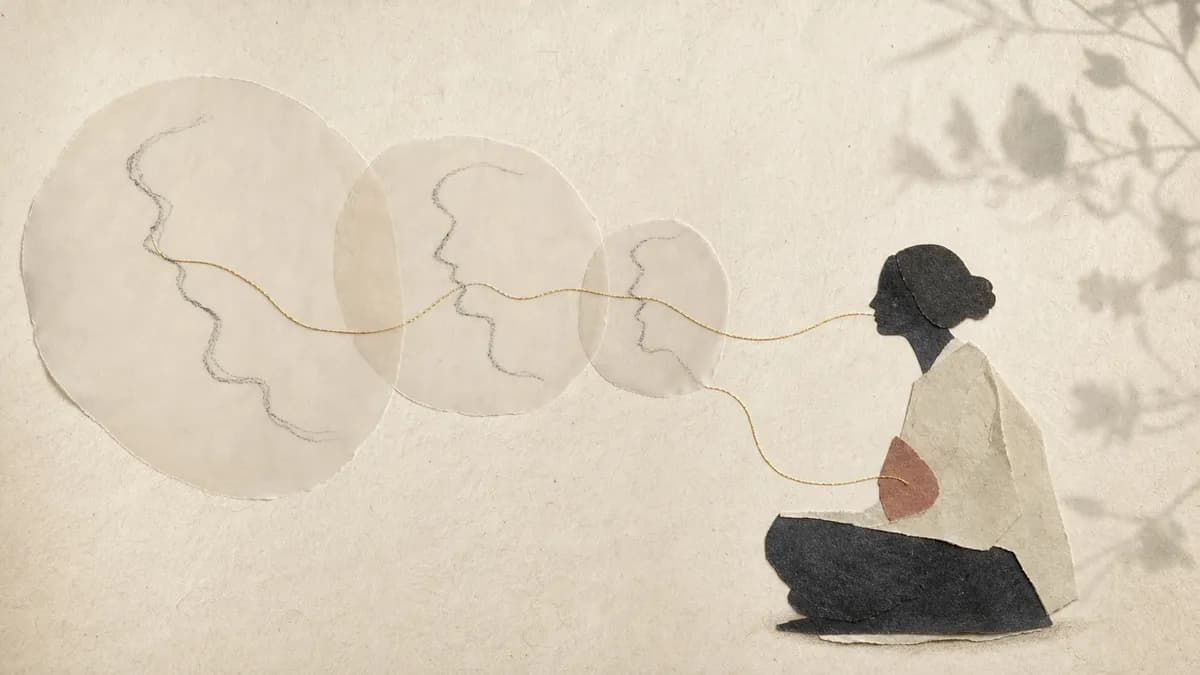
It's 8am and your head is already full. The email you never answered. The thing due Friday you keep sliding past. A dread you can't name, a to-do list you're scared to open, six half-plans fighting over the same square inch of attention. You know you should sort out the day. You can't find the end of the thread to pull.
If mornings feel like this, you're not lazy, and you haven't failed at something everyone else figured out. Most planning tools just assume the hard part is deciding what to do.
Color-coded planners, the app everyone swears by: pick your tasks, then work the list. But deciding was never your problem. Your head is already overflowing with options. The hard part is starting, and holding the plan together once you have it. A tool that treats the plan as the easy part is solving a problem you don't have.
Why planning a day is so hard for an ADHD brain
Start with why the standard advice keeps failing you, because it isn't a character flaw. Planning a day leans on a specific set of mental skills, the ones researchers call executive functions, and ADHD makes several of them harder at once.
The first is task initiation, the plain act of starting. Not the will to start, the switch that fires the first move. The second is working memory, the mental whiteboard where you hold a few things at once while you arrange them. Planning asks both to work together, cold, at the worst possible time of day.
Picture the blank planner page. It looks simple. What it actually asks is for you to hold six competing thoughts in mind and translate them into neat, ordered language, all at the same time. For a brain that runs short on working memory, that isn't a small ask. It's the exact operation the page can't help you with. So you stall, and the stall feels like laziness or failure. It's neither. The blank page is a working-memory problem, not a motivation problem.
Time makes it worse. Many people with ADHD live with time blindness, a shaky read on how much time has passed and how long anything will take. So even the plans you do make tend to be plans for a day that doesn't exist: eight things scheduled into room for three, and by 10am you're behind and demoralized before you've really begun.
Now look at what a standard planner assumes. It assumes you sit down, face the blank page, and lay the day out in order. That's built for a brain that finds starting and sequencing easy, a neurotypical brain, and it fails yours at precisely the step yours finds hardest. Planners miss an ADHD brain for the same reason most journaling apps do: they were designed for a different bottleneck than the one you actually have.
If you've spent years assuming you were the problem, this is the reframe. Your brain isn't broken, lazy, or undisciplined. It's wired for a different bottleneck. Fix the bottleneck and the mornings change.
What a fix actually has to do
If the bottleneck is starting, holding, and prioritizing, then anything that genuinely helps has to do three specific things. Not supply more discipline. Three concrete jobs.
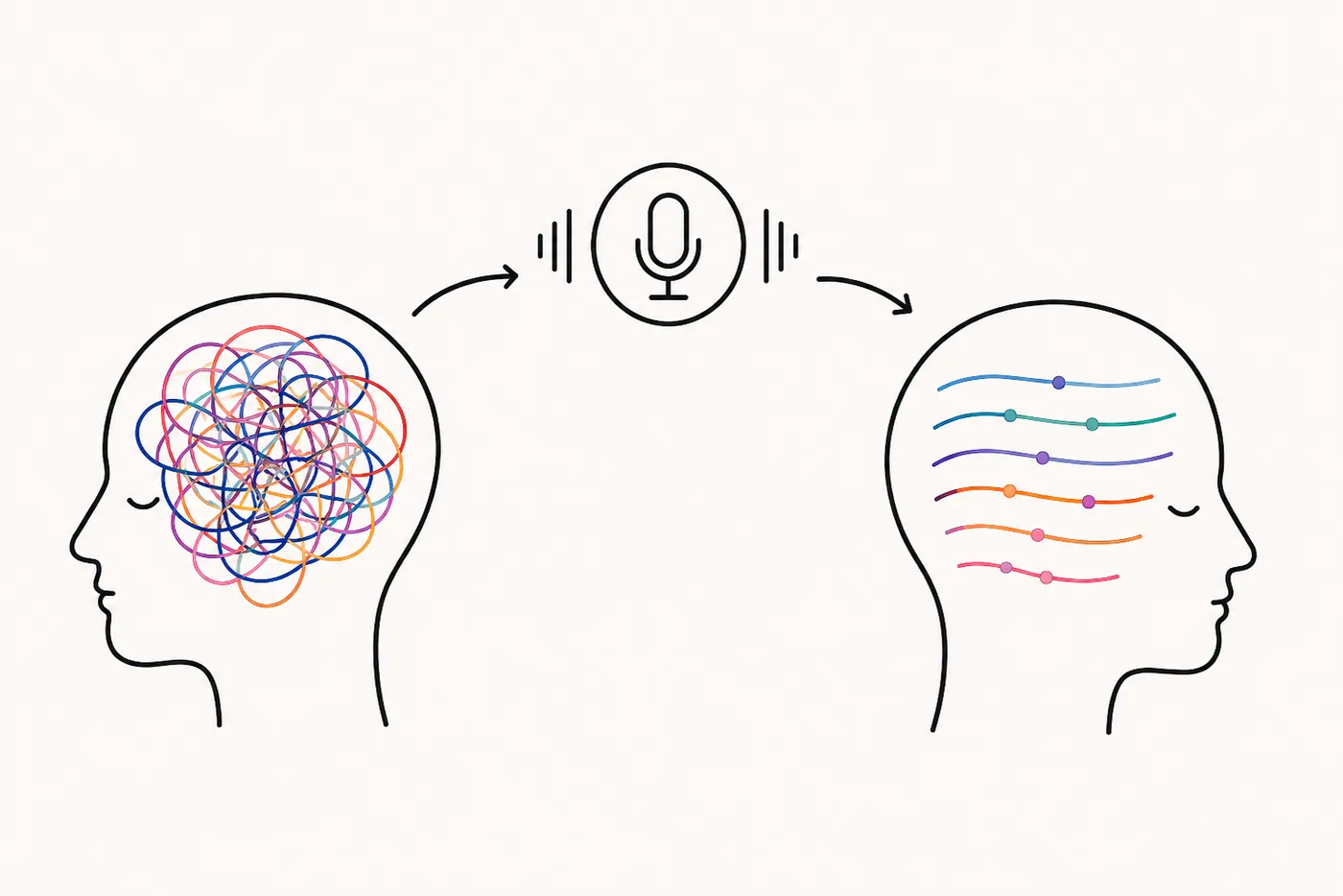
1. Remove the blank page, so starting doesn't stall. The fix for a working-memory bottleneck is to stop leaning on working memory. Instead of arranging the day in your head, get it out of your head first, and do it by speaking, not writing. That's voice journaling, and it skips the writing step that shuts out a brain thinking faster than it can type. The thought goes from your head to captured before the internal editor, or the overwhelm, takes over. Elle, who lives with autistic burnout, highly comorbid with ADHD, described the shift when she moved from writing to speaking:
"There's like a gap between whatever I experienced, the feeling, and then my brain taking it, spinning it, and creating a story around it. There's like this three-second window, and I hadn't had that like pause before."
Voice holds that window open long enough to catch what's actually there. There may be a mechanism under the relief, too. Research on cognitive offloading — the idea that using an external surface can reduce the mental demand of a task — offers a plausible reason: once the pile is somewhere you can see it, you're no longer spending working memory to hold it in place. Those studies weren't run on ADHD, so treat this as a likely reason the relief is real, not proof of one. Either way, set the pile down where you can see it and the weight tends to drop before you've solved a single thing. Voice is also what tends to unlock journaling for an ADHD brain at all.
2. Hold your context, so you're not starting from zero every morning. Getting today out of your head is only half of it. Tomorrow the pile is back, and last week's priorities, the ones you worked out the hard way, are gone. A real fix has to remember for you: what mattered on Monday, the thing you keep meaning to get to but never do, so each morning builds on the last instead of re-deriving your whole life from scratch.
3. Prioritize by what matters to you, not by what's loudest. A to-do list tells you to prioritize, the one step ADHD makes hardest, and hands you nothing to do it with, so the loudest or most overdue item wins by default. But urgency is a bad sort key for an ADHD brain, which runs on interest and meaning far more than obligation. The better key is your own values. That's not soft advice: goals that line up with what you care about, what researchers call self-concordant goals, get more sustained effort and get finished more often. So the fix has to weigh each item against what actually matters to you, not against the clock.
The honest part: voice journaling covers that first job on its own. Speaking the pile out loud gets it out of your head. But on its own it doesn't remember what mattered last week, and it doesn't weigh today's pile against your values, so jobs two and three stay on you, every single morning, at exactly the point where your executive function is thinnest. That's the gap. The voice journaling that actually helps an ADHD brain is the kind that also remembers, and adapts to how you think.
Rosebud is built for exactly this
Those three jobs are the reason Rosebud exists. It's voice journaling that also remembers: it learns from your past entries and adapts to how you think, so it covers the two jobs a plain voice journal leaves undone.
You speak your brain-dump instead of facing the blank page, so starting never stalls. Because it remembers your past entries, it holds the context a plain voice journal loses: the value you keep returning to, the task you've dodged three Mondays running. And when you sort the pile, it reflects those real patterns back, so you're prioritizing against your own history instead of a stranger's template or whatever's loudest. Voice, memory, reflection: the three jobs in one place, so the two that used to fall on you don't.
The planners on your phone weren't built for your brain. This is one that is.
Your five-minute morning
- Dump (2 min). Open Rosebud and say every open tab in your head out loud. No order, no editing, no full sentences.
- Sort (1 min). Read or replay it back, with your past entries there for context, and weigh what you said against what matters to you today, not what's loudest.
- Pick three (30 sec). Three at most. The rest stays captured, safe, not today's problem.
- Name first steps (1 min). For each, the smallest first physical action. Not "do taxes," which is a project, and projects trigger paralysis, but "open the tax folder." Make it almost too easy. If that first action is where you always stall, how to stop procrastinating digs into that exact moment.
- Add slack (30 sec). Spread the three across the day with room between them. People with ADHD misjudge how long things take, so pad the estimates. Fewer things with breathing room beat a packed schedule you blow past by 10am.
That's it. A morning of overwhelm becomes three things you can actually start, working with the parts of your brain that fire instead of fighting the parts that don't. For a lighter version, the same idea runs a daily intention journal for ADHD, a three-question take on starting the day on purpose.
Rosebud is a self-reflection tool, not a treatment or a substitute for professional care. Mostly, it helps you find a gentle way into the mornings that used to feel like too much.
You don't need more discipline. You need a plan your brain can pick up. Start with the dump, out loud, in Rosebud, and let the plan come from your own reflection instead of thin air.
References
- CHADD (Children and Adults with Attention-Deficit/Hyperactivity Disorder). Executive Function Skills. https://chadd.org/about-adhd/executive-function-skills/
- Time Perception in Adult ADHD: Findings from a Decade - A Review. International Journal of Environmental Research and Public Health. https://pmc.ncbi.nlm.nih.gov/articles/PMC9962130/
- Risko, E. F., & Gilbert, S. J. (2016). Cognitive Offloading. Trends in Cognitive Sciences, 20(9), 676-688. https://doi.org/10.1016/j.tics.2016.07.002
- Sheldon, K. M., Elliot, A. J., Ryan, R. M., Chirkov, V., et al. (2004). Self-Concordance and Subjective Well-Being. Self-Determination Theory. https://selfdeterminationtheory.org/SDT/documents/2004_SheldonElliotRyanChirkovetal.pdf