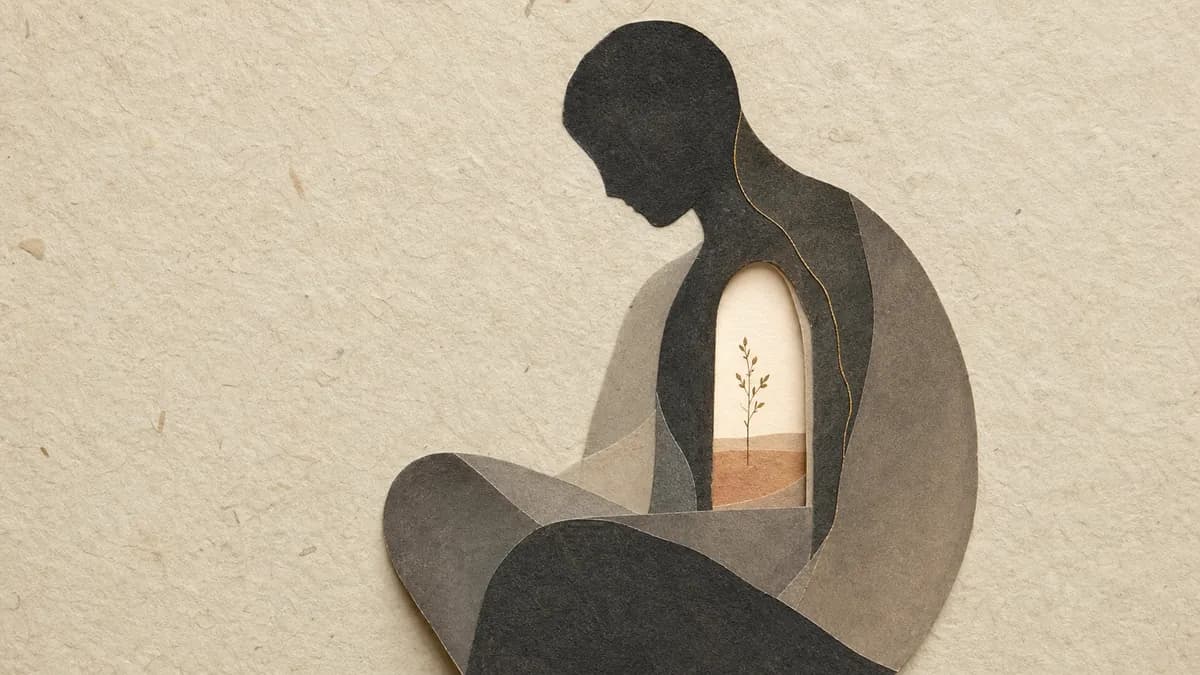
If you spend any time reading about mental health, you have probably seen someone talk about inner child healing. The phrase shows up across social feeds, podcasts, and popular psychology paperbacks. Sometimes a therapist mentions it in a session. The pitch usually sounds appealing: by getting in touch with a younger version of yourself, you can resolve old wounds, stop repeating painful relationship patterns, and feel grounded.
When you look past the warm language, practical questions come up fast. What does the term actually refer to? Is there real clinical evidence behind it, or is it just a comforting metaphor? Most importantly, if you want to try it, how can you do so without stirring up painful memories you are not equipped to handle alone?
Inner-child healing is a popular self-help idea, not a clinical condition or an independent therapeutic method. Related concepts exist inside a few established therapies that researchers have evaluated for specific clinical conditions, but the self-help version people discuss online has almost no direct scientific support. A short, gentle written practice is reasonable to explore on your own if you know when to stop and bring hard emotional material to a licensed professional.
Where the idea comes from
The term entered popular culture decades before it appeared in wellness feeds. In 1963, physician Missildine published a self-help book titled Your Inner Child of the Past. Missildine brought the phrase into mainstream discussions about personal growth, suggesting that adults carry former childhood feelings and reactions into their daily adult lives. It was written as popular psychology for the reading public, not as a controlled clinical trial.
Over the following decades, the phrase drifted into clinical conversations, often with little agreement about what it meant. In a 1996 essay in the journal Dissociation, Donald A. Price noted that the literature contained many different definitions of the inner child. Clinicians used the phrase loosely to describe emotional states, lingering habits, or metaphors for early attachment needs.
Price also raised a serious concern about how people approached the concept outside controlled clinical settings. He observed that because the inner child phenomenon is so idiosyncratic, and the potential for activating more emotion than an individual or a setting can handle is so high, doing inner-child work in a large group format is very risky. When people try to reach intense, vulnerable emotional states without individualized clinical support, they can easily become overwhelmed.
The inner child is a metaphor. It is an explanatory framework people use to organize their feelings and reflect on their personal history. It is not an organ, an objective biological structure, or a formal psychiatric disorder. Understanding it as a metaphor keeps you grounded. It reminds you that you are looking at your own thoughts and emotional habits, not uncovering an independent entity living inside your head.
How clinical therapies use related ideas
While mainstream self-help treats the inner child as an informal idea, several formal therapeutic models work with childhood memories and internal emotional states in structured ways. These models do not teach popular inner-child healing as seen on social media. Instead, they use precise clinical frameworks designed for trained therapists working with clients in clinical settings.
An established example is schema therapy. Jeffrey E. Young, Janet S. Klosko, and Marjorie E. Weishaar outlined their conceptual model in their clinical practice guide. They described schema modes as the moment-to-moment emotional states and coping responses that everyone experiences. In their model, the Vulnerable Child mode is the state that experiences core emotional distress, taking forms such as the Abandoned Child, the Abused Child, the Deprived Child, or the Rejected Child. This mode concept grew out of clinical work with patients with borderline personality disorder.
In their 2003 clinical practice guide, Jeffrey E. Young, Janet S. Klosko, and Marjorie E. Weishaar stated their foundational assumption about child modes:
We believe that the Child modes are innate and universal. All children are born with the potential to manifest them.
That's the developers' own theory, not a tested finding. It's the closest clinical cousin of the inner child, and it was built for therapy rooms with a trained guide, not for a journal at home.
Another framework is Internal Family Systems, or IFS. According to the model outline published by the IFS Institute, which trains and certifies practitioners, the mind is naturally divided into multiple subpersonalities or parts. Within this model, exiles are young parts that have experienced trauma and become isolated from the rest of the internal system so the individual does not feel their pain, fear, or terror. The model assumes there are no bad parts, aiming to help these internal parts shift into non-extreme roles. This outline describes a theoretical model, not clinical proof of its efficacy.
A third clinical technique that directly addresses early memories is imagery rescripting. In a 1999 paper in Behaviour Research and Therapy, Arnoud Arntz and Anoek Weertman discussed using imagery rescripting and role play of childhood interactions with key figures to modify core cognitive schemas in personality disorders. Arntz and Weertman provided standardized protocols so that this emerging therapeutic method could be investigated in future experimental research.
Notice what these clinical models share: they were developed for clinical environments, guided by licensed therapists, and designed to address severe, long-standing psychological conditions. None of them suggest that unguided reflection at home is equivalent to clinical therapy.
What clinical trials have tested
When clinical researchers investigate therapies that work with early memories, they do not study casual journaling or self-help courses. They conduct controlled trials with trained clinicians working with individuals who meet specific clinical criteria. Those trials indicate that structured, clinician-guided work can be effective for severe conditions, but the results cannot be generalized to unguided self-help.
In a 2022 randomized clinical trial in JAMA Psychiatry, Arnoud Arntz and colleagues evaluated schema therapy for adult outpatients with borderline personality disorder across multiple countries. The trial compared combined individual and group schema therapy against routine clinical care and predominantly group schema therapy. The authors found that combined individual and group schema therapy was more effective and had greater patient retention than routine clinical care. The authors noted that processing severe childhood adverse experiences is a hallmark of schema therapy. That study demonstrated real benefits, but it evaluated a long-term, intensive clinical protocol delivered by trained specialists to patients with a specific clinical condition, not general self-guided reflection.
Imagery rescripting has also undergone systematic evaluation. In a 2023 meta-analysis in the Journal of Anxiety Disorders, Kip, Schoppe, Arntz, and Morina reviewed randomized controlled trials of imagery rescripting for mental disorders associated with aversive memories, including posttraumatic stress disorder, depression, anxiety, and eating disorders. The authors found that imagery rescripting, when conducted by a therapist, effectively reduced symptoms and produced effects similar to established active interventions. However, the authors noted that the number of trials for each specific condition was limited, and the interventions were delivered by clinicians in formal healthcare settings.
Internal Family Systems has far less empirical testing. In a 2026 randomized trial in Psychological Trauma, Joss and colleagues evaluated an online group-based IFS program known as PARTS for adults with posttraumatic stress disorder. The study found that the IFS program was feasible and acceptable. Symptoms decreased in the IFS group, but symptoms also decreased in the matched comparison group, with no significant difference between the two programs. This was a preliminary trial in adults with posttraumatic stress disorder, demonstrating that while the approach can be carried out safely with professional support, evidence comparing its efficacy to other interventions remains in early stages.
These studies confirm that working with childhood memories can help patients when a licensed professional directs the process. None of these trials tested self-help books, social media exercises, or solo journaling.
What remains unstudied in self-help
If you look for scientific studies testing inner-child healing as a self-help practice, you will find almost nothing. The widespread popularity of the topic online exists almost entirely without direct research.
Only one study has evaluated a program explicitly described as an inner-child healing course. In a 2025 study in The Journal of General Psychology, Derakhshan, Jafari, and Khalilian examined an inner-child healing course among married women recruited at psychotherapy centers in Iran, comparing them to a control group that received no intervention. The authors found improvements on some family relationship questionnaires, but the course produced no significant changes in other measured areas, including commitment, responsibility, or fear of COVID-19. Because the study was quasi-experimental, used convenience sampling, and compared the course only to an inactive control group, it cannot prove that the inner-child concepts caused the observed changes. It shows how thin the direct evidence for dedicated inner-child courses really is.
The nearest laboratory experiment tested a self-guided written exercise addressed to an earlier self. In a 2024 experiment in Frontiers in Psychology, Sugimori, Yamaguchi, and Kusumi tested healthy Japanese university undergraduates who wrote a compassionate letter to their past self from a few years earlier. The researchers found that writing a compassionate letter to a past self decreased negative feelings immediately after the exercise more than writing to a future self.
That experiment gives a helpful clue, but it also had clear boundaries. The participants were healthy students, and anyone currently seeking clinical care for a mood or mental health condition was excluded. The researchers measured mood changes only in the minutes immediately following the writing task. Most importantly, the participants wrote to their high school selves from a few years prior, not to their young child selves.
The gap between clinical research and commercial self-help is wide. Therapies that process childhood memories work when therapists guide them, but self-guided inner-child healing remains largely unstudied.
A gentle journaling practice to try
Because direct research on self-guided inner-child work is so limited, any personal practice should stay simple, grounded, and cautious. You do not need an elaborate ritual, a dramatic visualization, or an intensive emotional purge.
A reasonable starting point adapts the experimental setup from Sugimori, Yamaguchi, and Kusumi. Instead of trying to resolve complex emotional history, write a short, kind note to a younger version of yourself about an ordinary moment you already remember clearly.
Here is how to keep the exercise gentle and contained:
Pick an ordinary moment. Think of a specific, everyday memory from your childhood or teenage years where you felt awkward, uncertain, or left out. Avoid memories involving severe trauma, abuse, or intense grief. You want a moment you already recall easily without effort.
Write a brief note offering perspective. Spend a few minutes writing a short, compassionate letter to yourself in that specific moment. Acknowledge what you were feeling at the time, and offer the calm perspective you have acquired as an adult. Keep your tone matter-of-fact and kind.
Do not dig for forgotten material. Never attempt to uncover repressed memories or push yourself to recall events that feel hazy or blank. Memory is malleable, and trying to force recall of distressing childhood events at home is risky. Stick entirely to the facts of the event as you currently know them.
Put your pen down and return to the present. When your time is up, stop writing. Step away from your desk, stretch, or get a glass of water to bring your awareness back to your present environment.
Review entries to spot patterns over time. Rather than treating a single journal entry as a breakthrough, read your reflections back over weeks or months. Look for recurring emotional habits, like jumping to self-blame or feeling responsible for other people's reactions.
If you are exploring related reflective exercises like shadow work journal prompts, the same boundary holds. Examining unacknowledged emotions or defensive habits is valuable, but it requires a slow, steady pace. Pushing too hard into painful material does not speed up personal growth.
If you use Rosebud, it remembers previous entries and identifies emotional patterns across entries over time, which supports personal reflection between therapy appointments. In a July 2026 article on how to notice emotional patterns, I wrote that our journaling tool recognizes patterns across entries and holds long-term memory, surfacing candidates that you still judge yourself. Spotting a pattern comes first. The harder questions are best explored with someone qualified to help you ask them.
I started using Rosebud when I was at one of my lows. The idea came from my own experiences with therapy and coaching, and from meeting my co-founder Sean through a men's group where we practiced exactly this kind of open dialogue.
When to stop and seek professional support
There is a common assumption in self-help culture that any emotional release is inherently healthy. Clinical evaluations tell a different story. Pushing into deeply upsetting memories without appropriate clinical containment can cause genuine distress.
In a 2007 review in Perspectives on Psychological Science, Scott O. Lilienfeld examined psychological practices that cause harm. Lilienfeld noted that expressive-experiential therapies can encourage some clients to express intensely anxiety-producing feelings before they have had an adequate opportunity to habituate to them, which can leave them worse off. Lilienfeld also stressed that simply because an intervention does not appear on an official list of harmful practices does not prove that it is safe.
Expressive writing about emotional crises can also hinder recovery under certain conditions. In a 2013 study in Clinical Psychological Science, David A. Sbarra, Adriel Boals, Ashley E. Mason, Grace M. Larson, and Matthias R. Mehl evaluated expressive writing among recently separated adults. The authors found that participants who were actively searching for meaning regarding their separation had worse emotional outcomes months later after expressive writing than after neutral control writing.
Sbarra and colleagues urged caution when applying expressive writing to difficult life events:
Finally, caution should be used in generalizing these results to all types of EW. Although it is possible that expressive journal writing at home or in conjunction with psychotherapy may impede recovery following divorce, the contexts in which these findings hold remains to be determined.
That's the researchers being careful, and I think they're right to be. Writing can help, but it isn't automatically gentle, so keep the practice short and stop when it stops feeling safe.
Even in high-quality professional therapy, difficult side effects occur regularly. In a 2018 study in Cognitive Therapy and Research, Marie-Luise Schermuly-Haupt, Michael Linden, and A. John Rush analyzed therapist reports regarding outpatients in cognitive behavior therapy. The researchers documented that side effects, including distress, symptom deterioration, and relationship strain, are frequent even in appropriately delivered care. If structured clinical therapy led by trained professionals routinely causes distress, self-guided exploration of early pain at home can easily do the same.
In a July 2026 article on how to journal between therapy sessions, I emphasized that self-guided writing should never compete with clinical care. If your therapist assigns specific reflective work, that assignment comes first. Free journaling should only catch what the clinical assignment does not cover.
Knowing when to stop is the most important part of any self-reflection practice. If writing about your past triggers persistent distress, physical panic, feelings of hopelessness, or intrusive thoughts, close your journal immediately. Ground yourself in your physical space, and speak with a licensed mental health professional.
If you are experiencing acute distress, overwhelming emotional pain, or thoughts of self-harm, journaling is not the right tool. In the United States, please call or text 988 to reach the 988 Suicide & Crisis Lifeline for support. Outside the United States, please contact your local emergency services. Rosebud is built for personal reflection between therapy appointments, not for crisis care.
If you want a steady space to reflect on your thoughts and notice patterns over time, explore Rosebud.